Invisible offers → higher engagement with relevant ones
ux research
product design
fintech
2025
Setup
In the Raiffeisen Bank Ukraine mobile app, offers lived everywhere and nowhere at the same time. Push notifications, inbox messages, dashboard banners, product screens — the system had plenty of touchpoints, but no destination.
If a user missed a push or ignored a banner, that offer was effectively gone. The inbox accumulated messages over time, most of them outdated. When a user had a real need and asked: "What can the bank offer me right now?" — the product had no clear answer.
The business wanted higher CTR and CVR on offers. The underlying issue was not visibility. It was fragmentation.

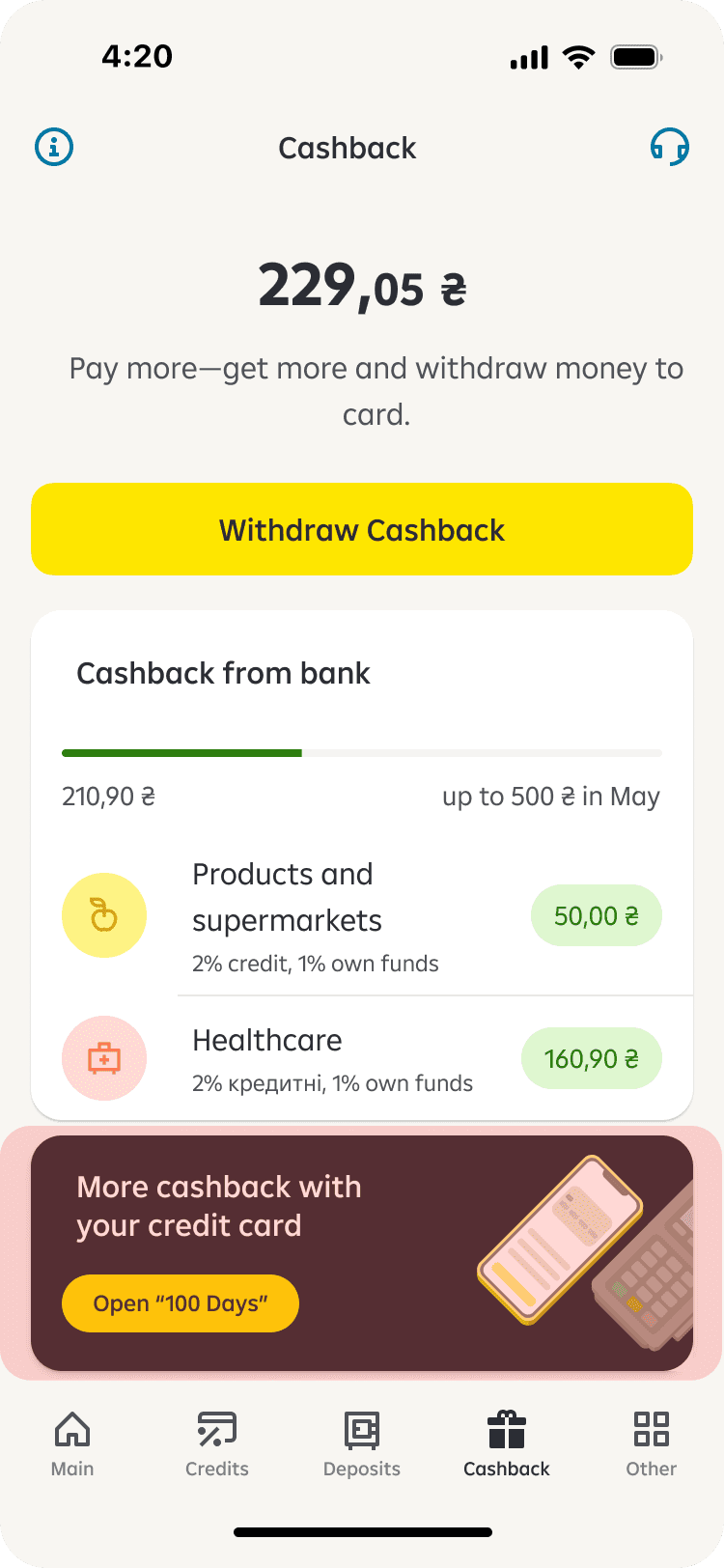
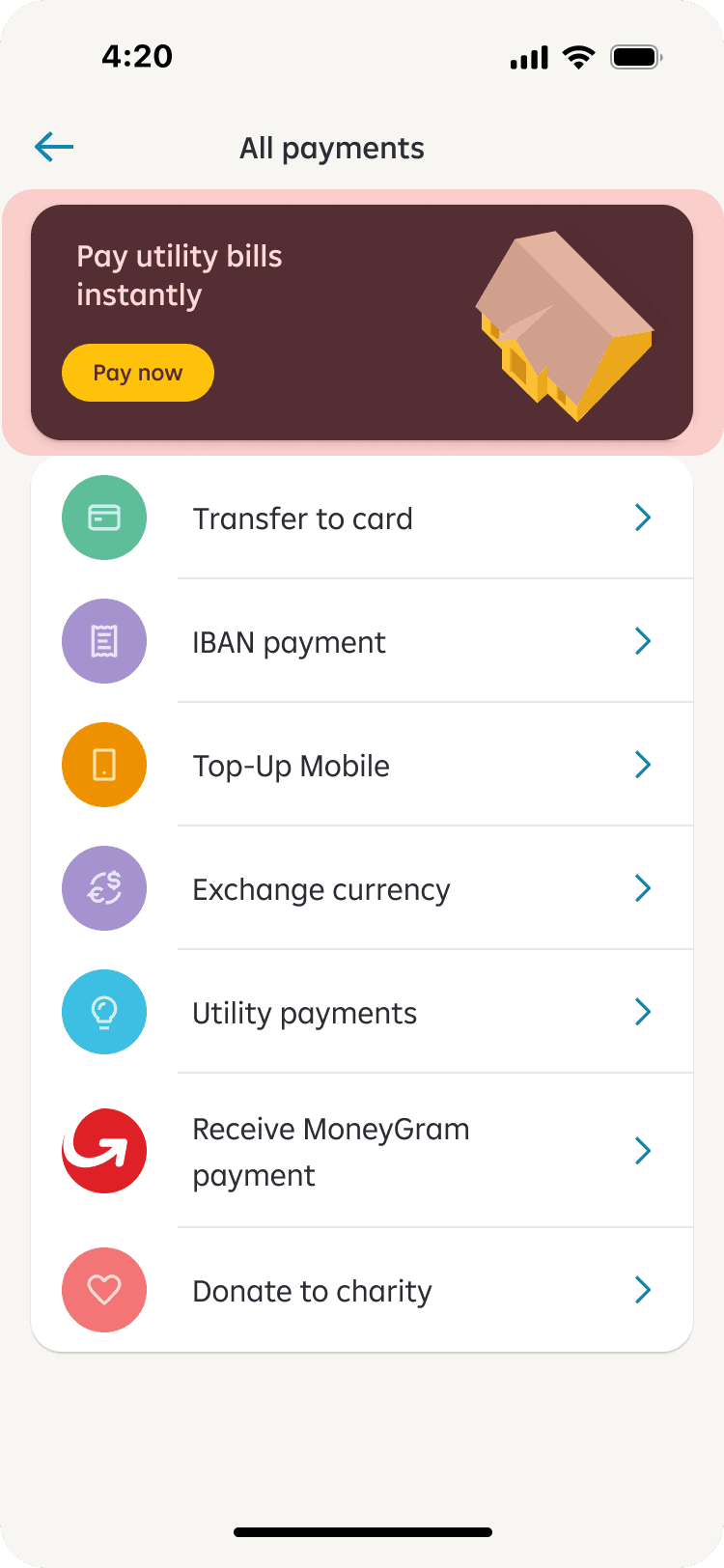
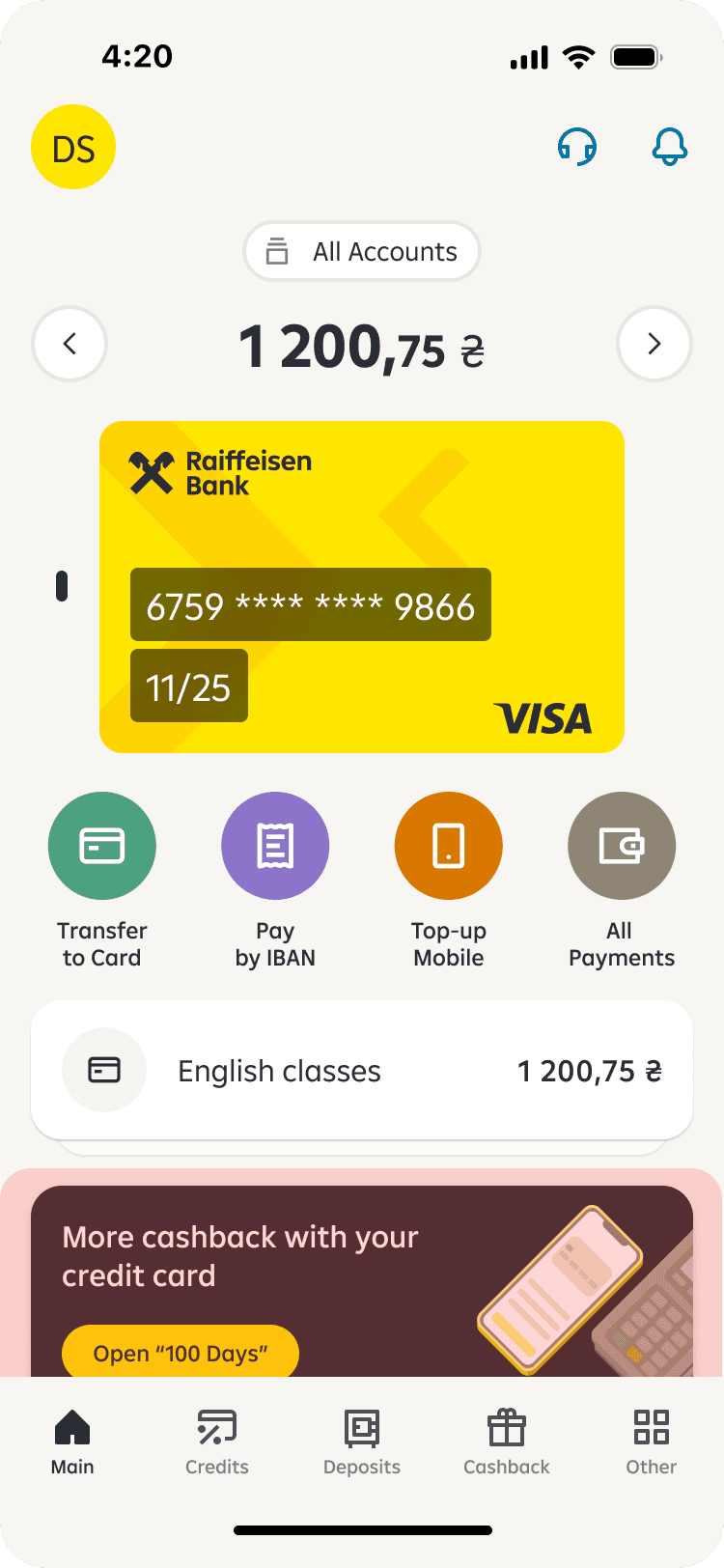
Today, offers are scattered across multiple channels: different pages, tabs, which makes them feel like noise. Customers struggle to find what's relevant and end up missing out valuable opportunities.
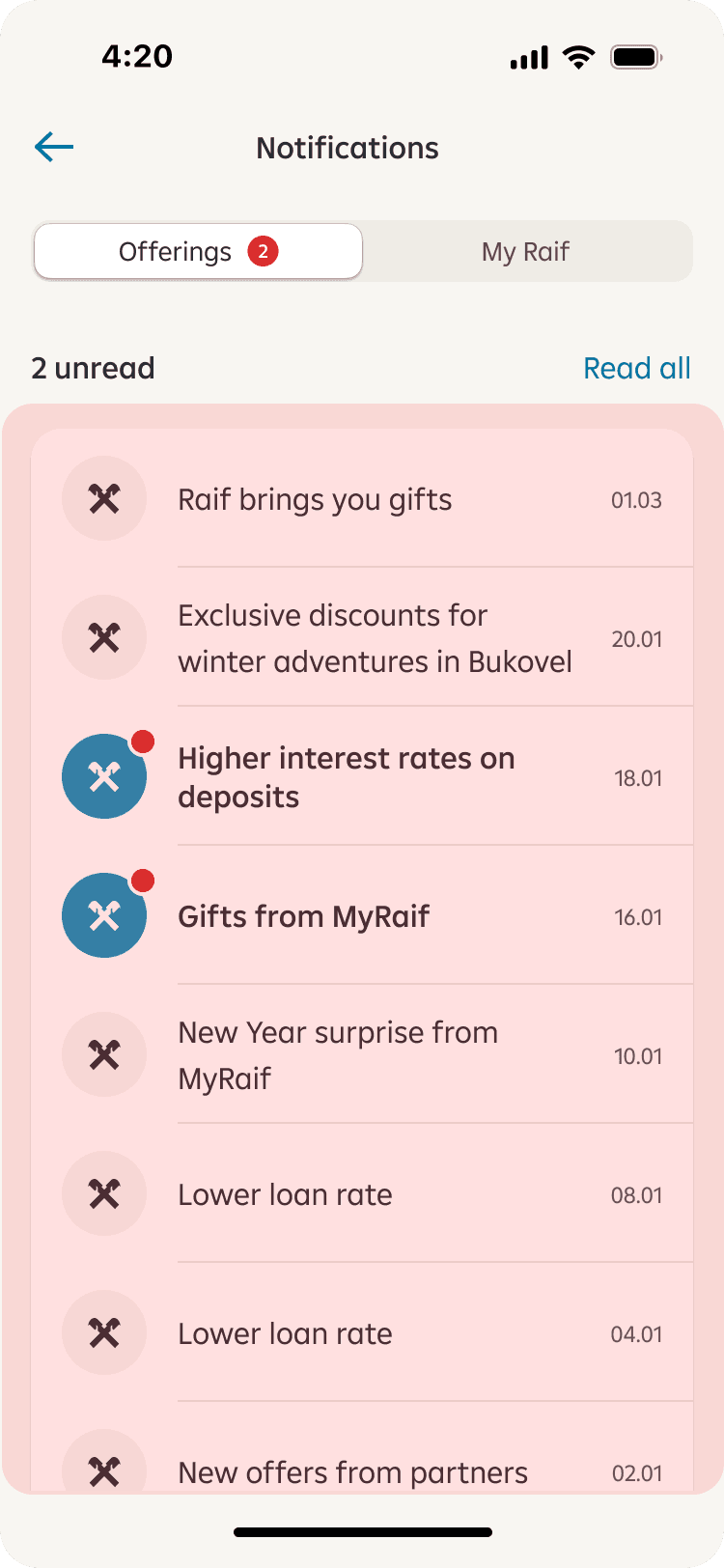
What's still valid? How do I find what's actually relevant to me right now? The push inbox fills up with expired offers over time, turning it into a graveyard of irrelevant content.
Defining the space — workshop with business
Before designing anything, I needed to answer a more fundamental question: what is Offer Storage and what is it not?
Shared definition of value
The team converged independently on the same core idea — a single place for personalized, relevant offers without noise.
Degradation model
We imagined a failure scenario six months after launch: 30+ items, no curation, conversion at 0.3%. This turned abstract concerns into specific rules for what qualifies, how many can coexist and how they expire.
Concrete boundary decisions
The team sorted real bank communications into what belongs, what does not and what needs discussion.
Concept level — choosing the shape
With principles in place, I moved to the structural question: what kind of space should this be?
Two directions emerged:
Financial hub
Experimental solution, where offers combined with product overviews, loan status, deposit details and financial insights.
Dedicated offers page
Single purpose, single reason to visit.
To validate the direction, I used the Kano model combined with a quantitative survey. The results were clear: users wanted a dedicated space for offers and did not want it mixed with product statuses or financial overviews. The place itself was a real need. But mixing purposes would undermine it.
Choosing a focused page meant committing to the rules we had defined — the shape was a design decision, keeping it clean was an ongoing responsibility.
Finding the right tone
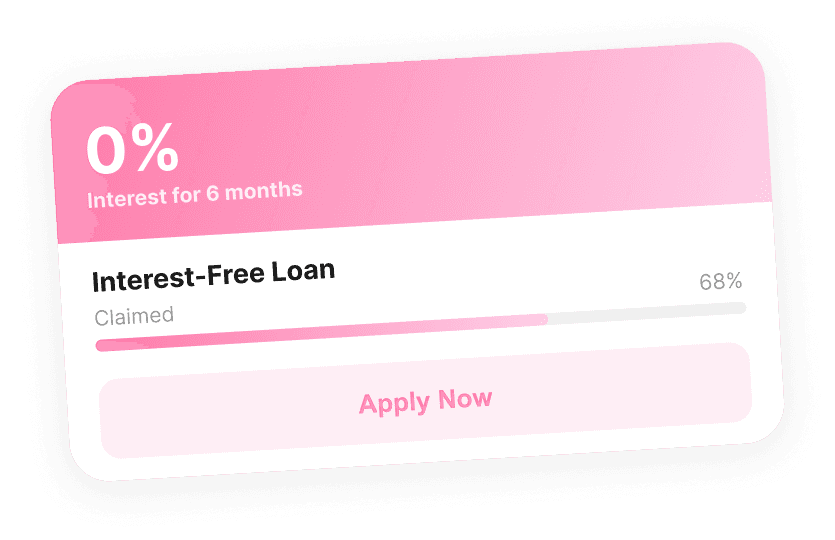
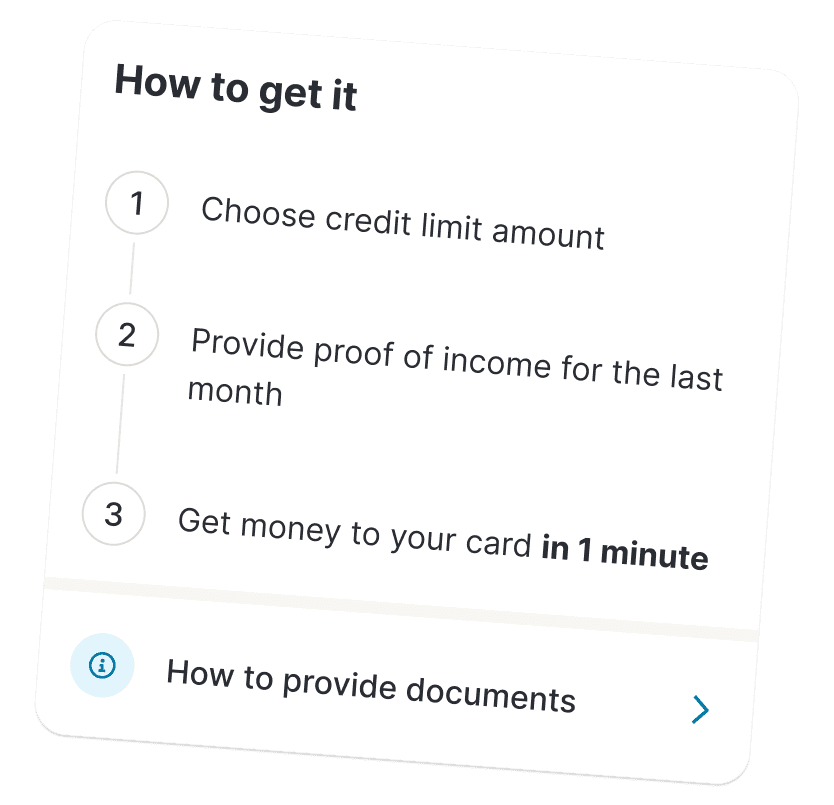
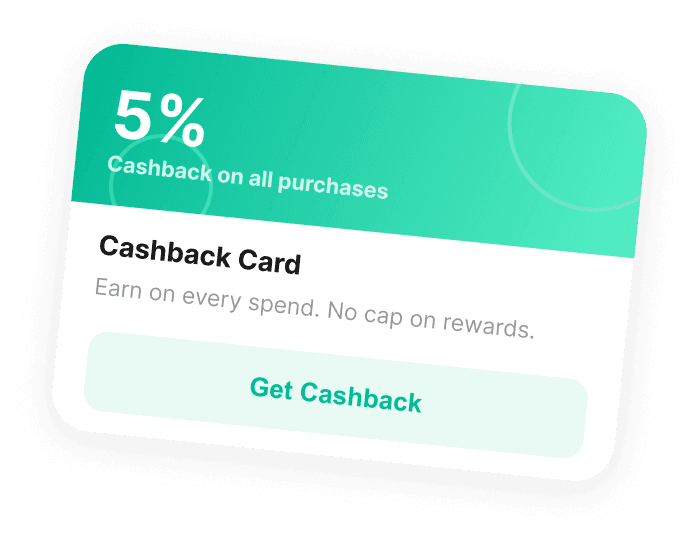
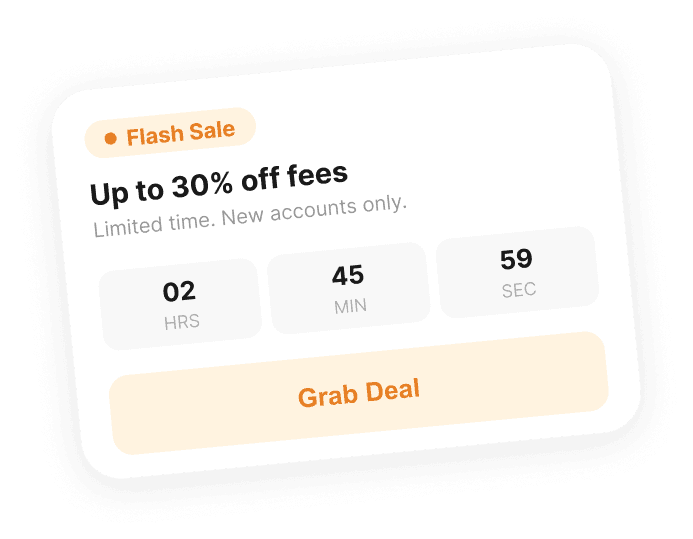
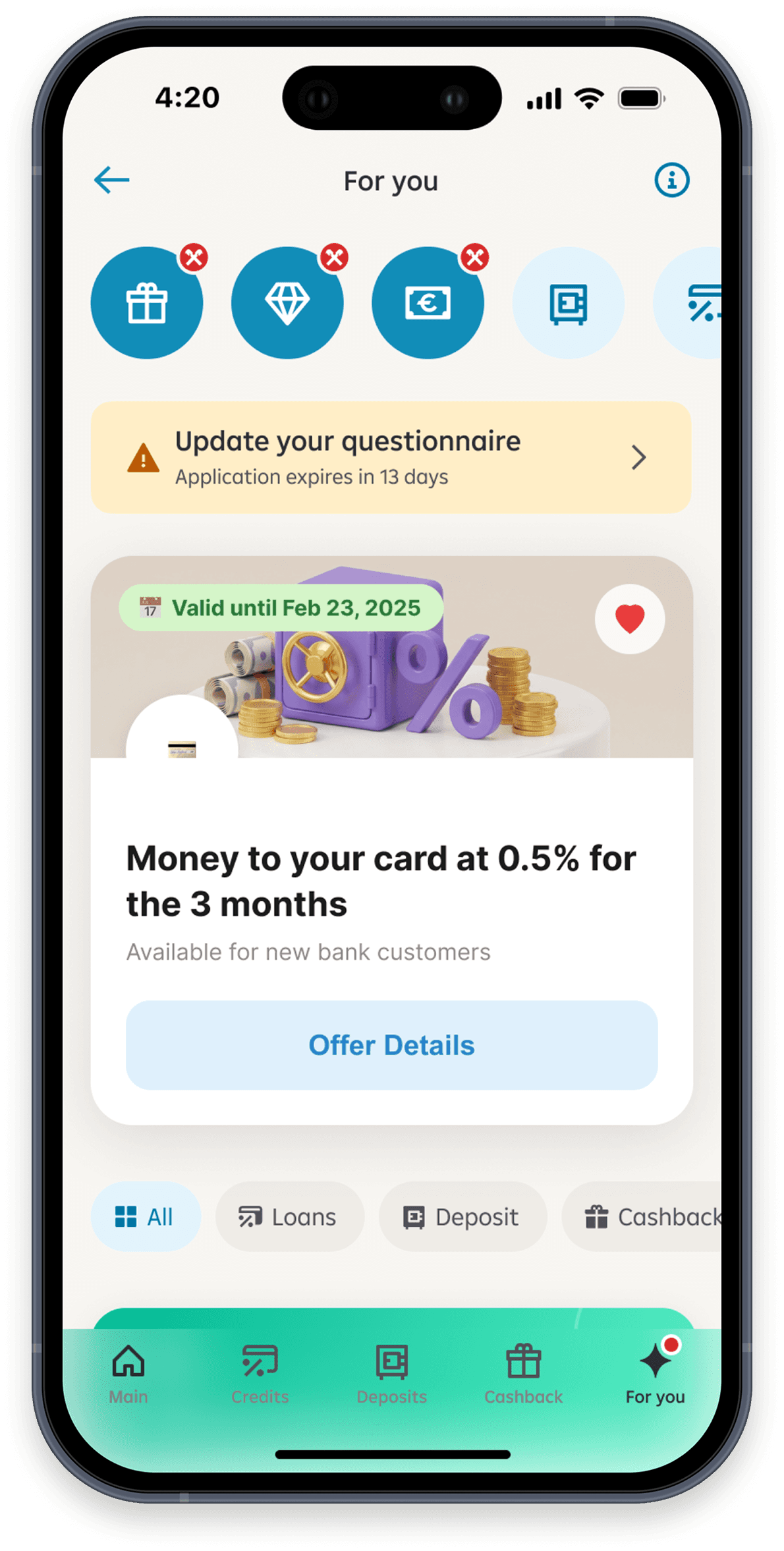
With the concept and structure locked, I moved into visual exploration. The goal was to find the right tone for the page — somewhere between a promotional storefront and a utility screen.
What comes next
Performance data: CTR, CVR, return visit rates will be collected once the feature has been live long enough to draw meaningful conclusions.
Notes to self
What I can say is that this project changed how the team thinks about offer distribution. The workshop principles, the boundary rules, the degradation scenario — these became reference points beyond this single feature. The conversation shifted from "where do we place this campaign" to "does this belong in the space we committed to protect."
The design work is done. The proof will follow.
you can find me
uxbydanylo@gmail.com