Mentoring designers through real design sprints
education
mentoring
design sprint
2025
Overview
I joined Service.so as one of three designers running design sprints — a format where real businesses bring real problems and students solve them through four days of intensive practice.
More than 50 students went through the program. Each sprint matched a real business with a team of designers who needed hands-on experience with the design process — not theory, but practice under pressure.
My role covered the full arc: I co-designed the sprint structure, built teaching materials for key activities — Opportunity Solution Trees, hallway testing, component design, usability testing — delivered lectures and guided students through the hard parts in real time.

Why mentoring
I reached a point where I had enough experience to share and wanted to reach people who were actively looking for it. Service.so sprints aren't a school — a better analogy is a gym. Students come to train and we as coaches explain the muscles, set up the equipment and spot them when things get heavy.
What I designed
Each material had to make a complex concept usable by someone with limited practice within a single session. If the explanation doesn't land, you see it immediately.
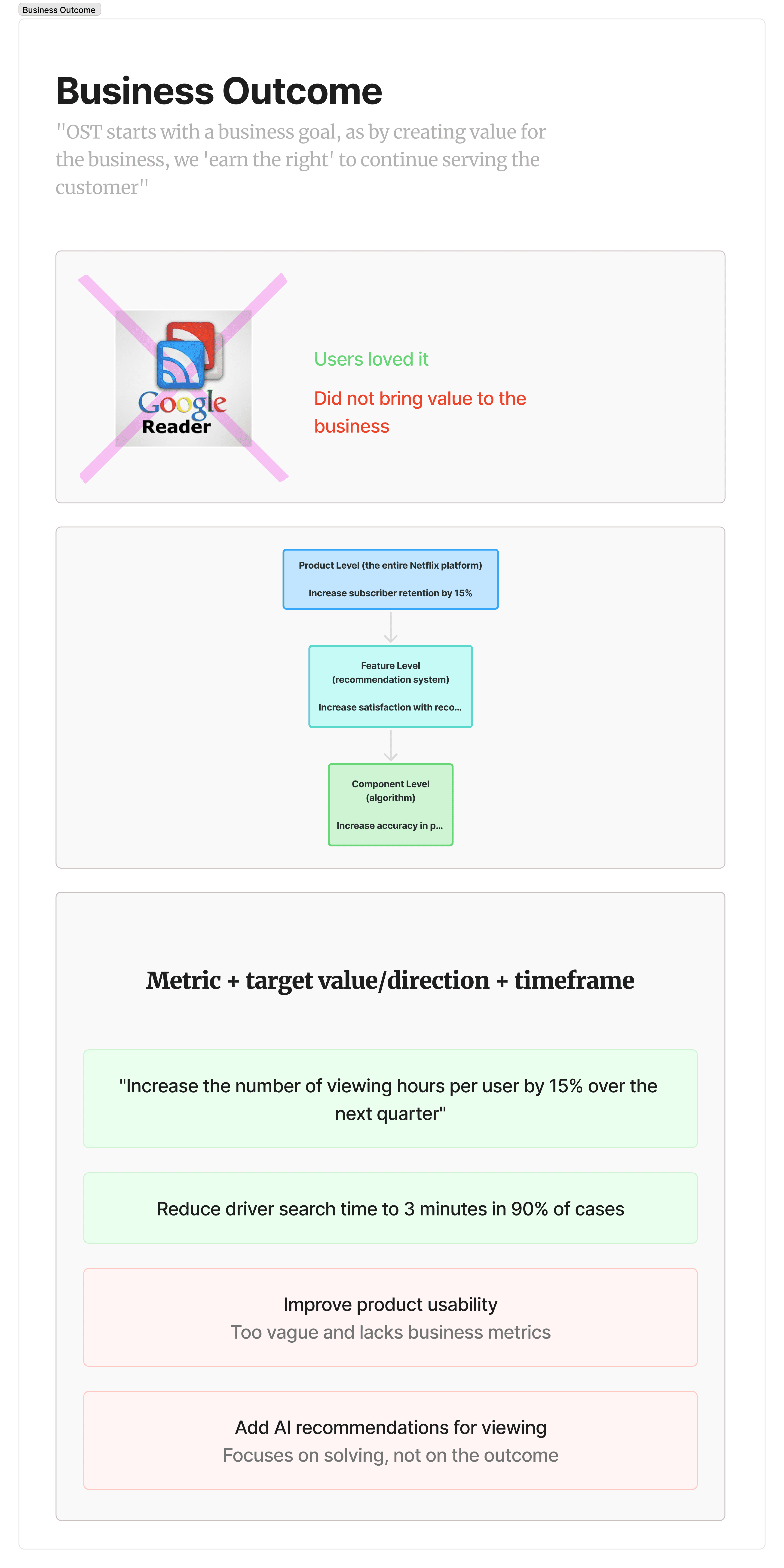
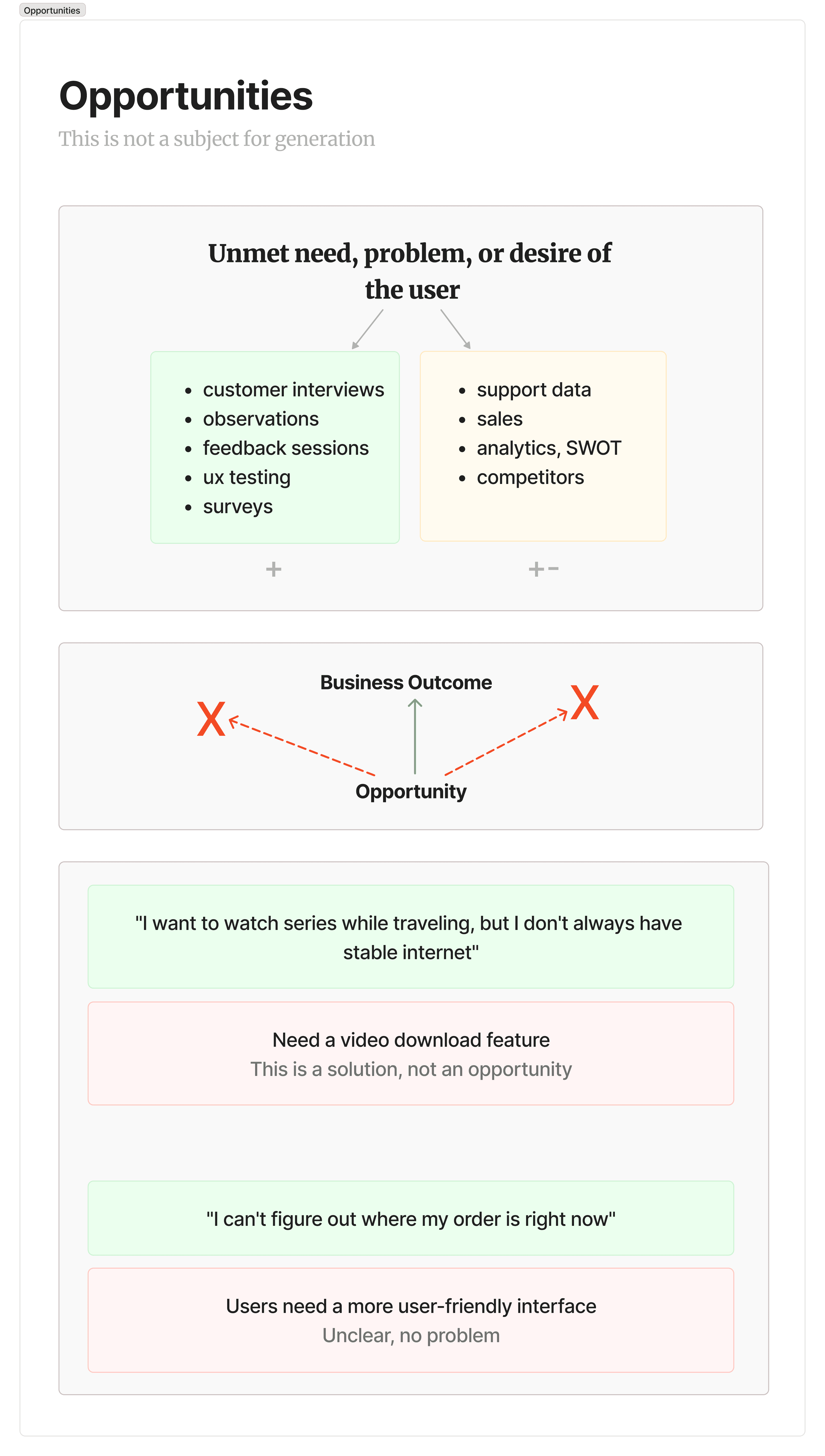
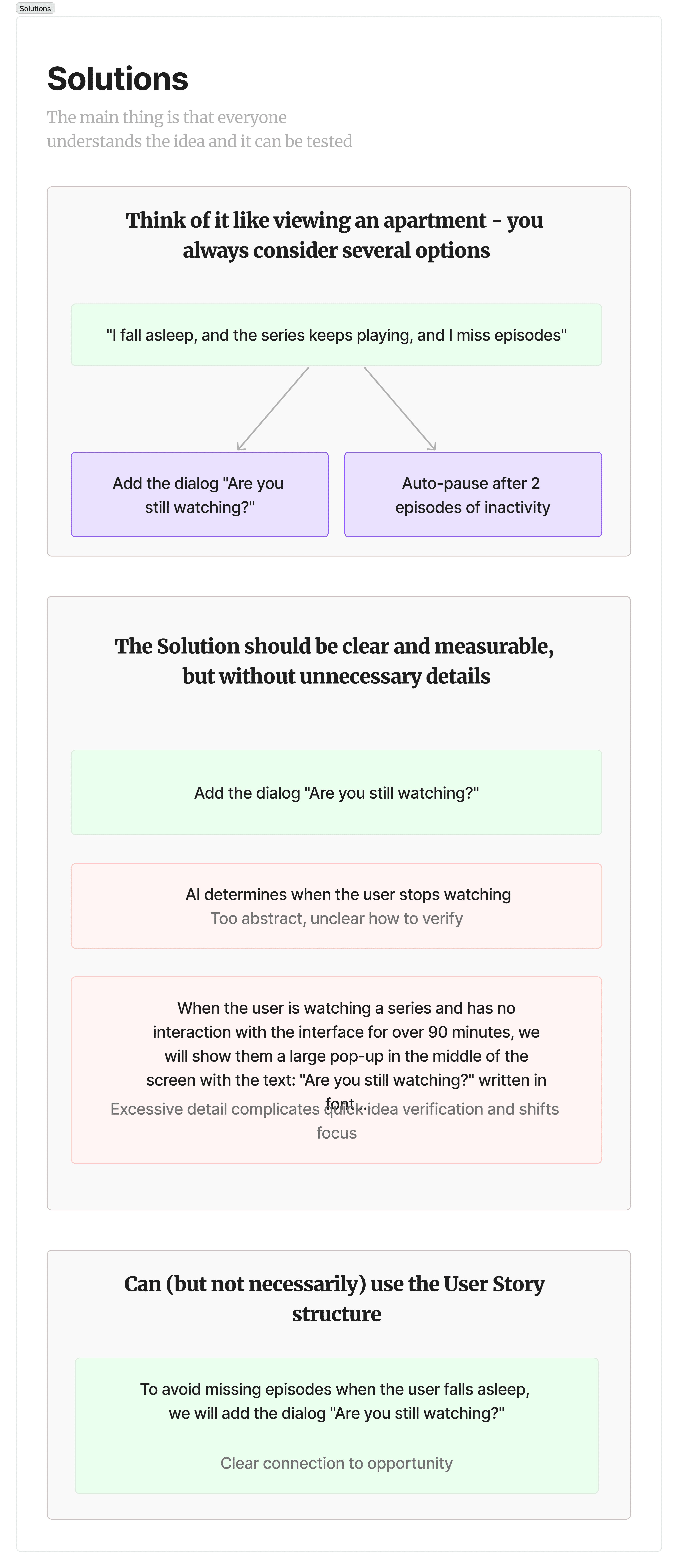
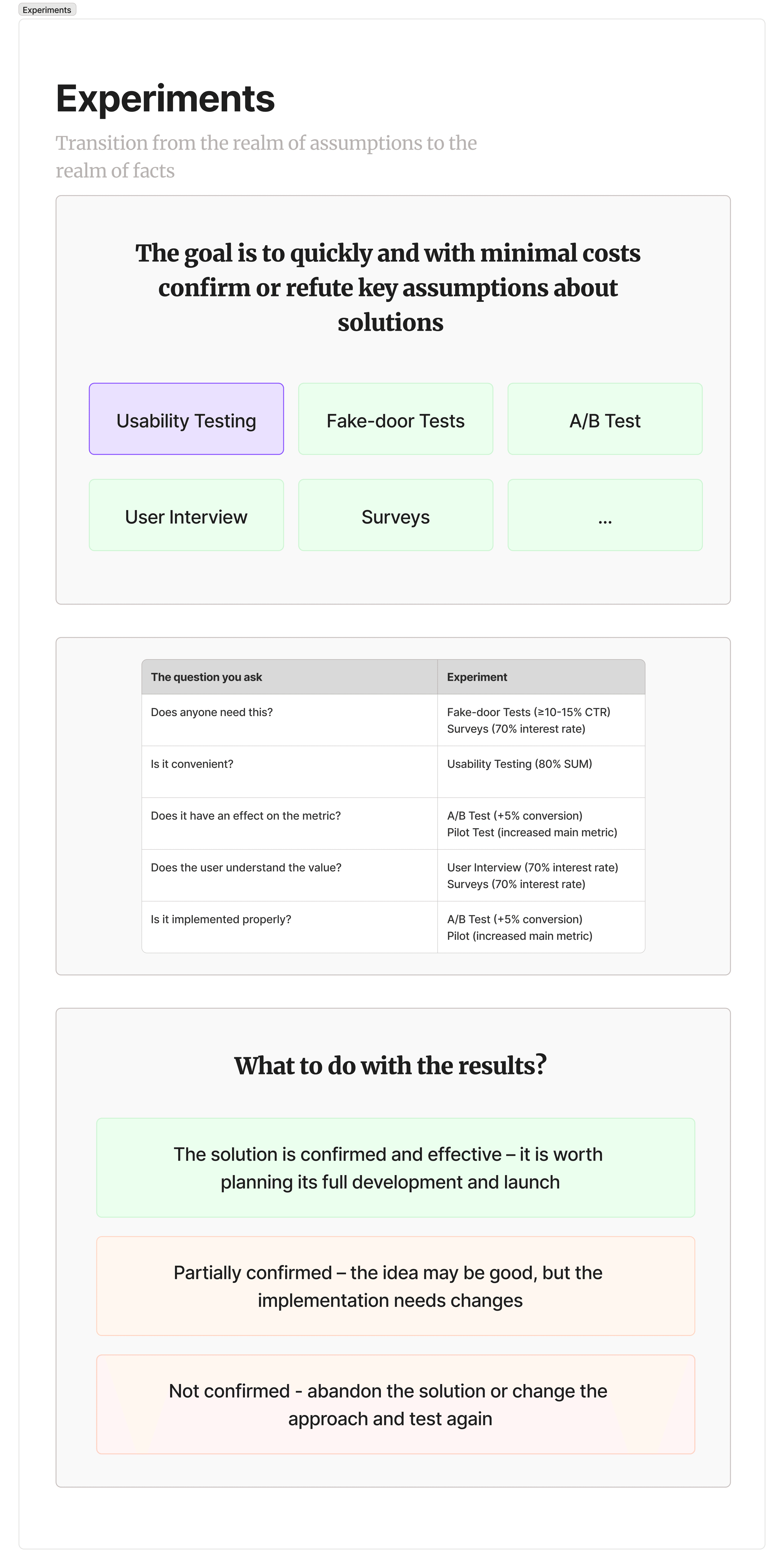
The clearest example is the Opportunity Solution Tree. OST moves from a business goal to solutions through iterative exploration of problems and opportunities. The difficulty is discipline — teams want to jump to solutions. The whole point is to slow that down.
I broke it branch by branch: goal, opportunities, solutions, experiments. Each layer paired with good and bad examples from real businesses, practical guidance on facilitation and enough context to make the abstraction stick. The first version lacked real-world anchoring: students got the theory, but froze in practice. I added more case examples and restructured the practice block to let them fail safely before the real activity.
The output
Each sprint delivered worked-through solutions to real business problems. But the real output was the process students took back to their jobs — the thing most of them couldn't access in day-to-day work. Feedback was consistently strong: finally practicing a real design sprint, not just reading about one.
you can find me
uxbydanylo@gmail.com